
Boat covers are like your boat’s best friend, shielding it from all sorts of elements that could potentially ruin the good times on the water. Whether it’s rough weather or relentless sunshine, these protective layers are a must-have. Think of them as the security blanket your boat never knew it needed.
Now, you might be wondering, why bother with a boat cover when my boat seems sturdy enough on its own? Well, it’s all about ensuring your investment lasts and performs at its peak. A good cover isn’t just about looking pretty at the dock, although that’s a nice bonus. It’s about stopping UV rays from fading those bright colors, preventing mildew from setting up shop, and keeping every bolt and fastener safe from rust.
Different covers serve different purposes, just like how you wouldn’t wear flip-flops in a snowstorm. Some covers are perfect for when your boat’s cozy in the garage, while others are built for the high-speed ordeal of towing. Making sense of these options helps you pick the one that’s right for your boating lifestyle.
Mixing style with utility is the name of the game. A well-chosen cover complements your boat’s design while providing the shield it needs. So, next time you step aboard, everything from the upholstery to the onboard electronics looks as fresh and bright as that first day on the water.
In a nutshell, boat covers are more than a throw-on-and-forget piece. They’re the guardians that ensure your days on the water are always smooth sailing, without constant worry over unexpected wear and tear.
Exploring the Types of Boat Covers: Choose What’s Right for You
Boat covers come in all shapes and sizes, each tailored for specific needs and situations. Let’s break down the most common types, so you can figure out what’s best for your vessel.
Starting with travel or trailer covers, these are your go-to for hauling your boat down the highway. Designed with a streamlined shape, they cut down on wind resistance and protect against road debris. They’re built tough with tear-resistant materials, handling the rigors of travel like a pro.
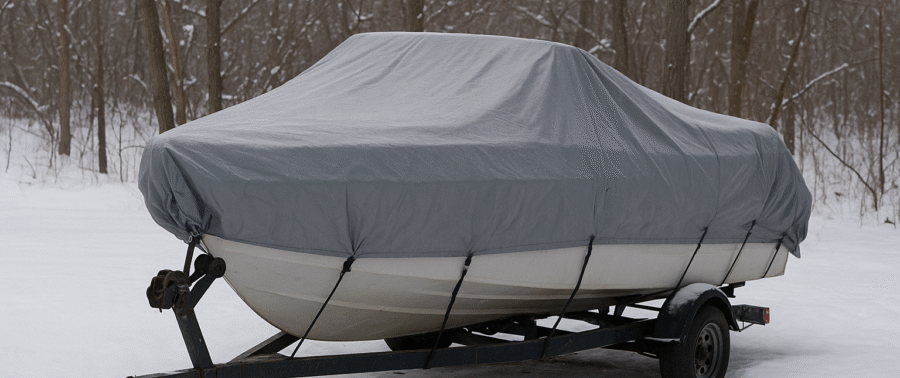
When it comes to storage, variety is the spice of life. Storage covers take the cake, ensuring your boat stays snug whether it’s parked on land or floating at the dock. You’ve got your typical storage covers for dry land stowing; then, there’s the mooring style for boats that remain in water. Let’s not forget winter covers that fend off ice and snow—perfect for cold weather warriors.
Bimini tops are another popular choice, especially if sun coverage is your primary concern. These beauties are typically made with lightweight materials like aluminum and fiberglass, offering ample shade without compromising on style. They’re all about those leisurely days on the lake, keeping everyone relaxed and shielded from harsh rays.
Now, if you’re looking for something a bit more encompassing, consider enclosures. These add a layer of protection without cutting off your view, as they usually come with roll-up sides and clear panels. They’re ideal for those surprise showers or gusty winds, keeping you comfy and dry while you enjoy time out on the water.
Choosing the right cover goes beyond just knowing the types. It’s about understanding your specific needs and matching them with the right protection. Investing in the right cover means more time enjoying your boat and less time worrying about maintenance woes.
Beyond the Basics: Bimini Tops and Enclosures for Advanced Protection
Diving into more specialized protection, Bimini tops and enclosures give you some serious coverage options. These are all about keeping things cool and dry, without sacrificing your sailing vibes.
Bimini tops come in handy when you want shade without boxing yourself in. Made with lightweight materials like aluminum or fiberglass, these frames give you a sturdy base for the fabric canopy overhead. They’re a favorite for those sunny days when you want to lounge on your boat without baking under direct sun.
Enclosures take it up a notch, functioning as a sort of portable room on your boat. Imagine roll-up sides and clear panels that let you take in the views without having to brave the elements. From shielding you from sudden rain to blocking sharp breezes, enclosures keep your boating experience as comfortable as it gets.
When picking between a Bimini top and an enclosure, think about your typical boat outings. Do you need just a bit of shade, or are full-on weather barriers more your style? Considering your environment and usual weather patterns can guide you in making a smart choice.
Both of these options hinge on more than just protection—they’re about enhancing your comfort and extending your relaxation time on the water. Choosing the right setup can turn an average day into an extraordinary adventure.
Material Choices: Which One Suits Your Needs Best?
Picking the right material for your boat cover is like choosing the right gear for a hike. Different materials bring their strengths, depending on what you’re up against.
Polyester tops the charts for durability. It’s tough, stands up well to mildew, and is kind on the wallet. Great for general coverage, it’s a solid all-rounder when your boat faces a bit of everything.
Canvas has a classic appeal, offering breathability that’s hard to beat. It’s known for standing the test of time, though you might need to waterproof it occasionally. Imagine it like a sturdy pair of boots that need a bit of TLC now and then.
Vinyl offers complete waterproof protection, ideal for areas with heavy rain. Keep in mind, though, that its low breathability can trap moisture inside—kind of like wearing a raincoat without vents. You may end up with mildew if you’re not careful.
Climate can be a game-changer when it comes to picking materials. For sunny, dry areas, UV resistance is a must-have, while those in wetter, cooler regions might prioritize waterproof features.
In the end, the right material depends on where you boat and what kind of conditions you usually deal with. Matching the material to your environment ensures your boat gets exactly the protection it needs.
Factors Influencing the Perfect Fit: Protecting Your Investment
Fit matters a lot when it comes to boat covers. A snug fit isn’t just about keeping things neat; it’s crucial for your boat’s long-term protection. A cover that’s too loose can flap in the wind, causing wear and damage over time. On the other hand, an overly tight cover might stretch the seams and lead to tearing.
Water protection and breathability are key factors to weigh. If your boat faces frequent downpours, a fully waterproof cover will keep everything nice and dry. But if you’re worried about mildew or mold from trapped moisture, look for materials that offer good breathability while still providing decent water resistance.
UV resistance should also be on your radar if your boat spends a lot of time in the sun. Sun damage can lead to fading and cracking, especially on the gel coat and upholstery. A cover with UV protection is like sunscreen for your boat, keeping everything looking sharp.
Your cover also acts as a first line of defense in terms of security, hiding what’s inside from prying eyes. This deters potential theft or vandalism, which is a major peace-of-mind booster.
Lastly, investing in a good cover can reduce maintenance time and costs, allowing you to enjoy more time on the water. Less cleaning and fewer repairs mean more sailing and less work.
In the grand scheme of things, the right cover is a simple yet effective way to ensure your boat remains in tiptop condition for years to come.